
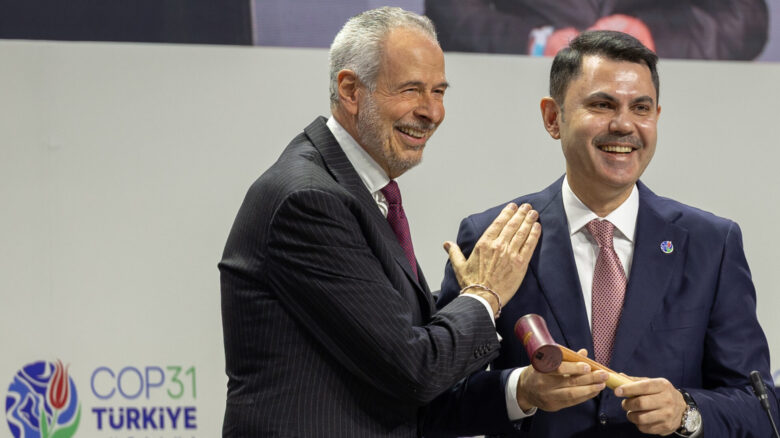
The 31st Conference of the Parties to the United Nations Framework Convention on Climate Change (UNFCCC) opened today in Antalya, Türkiye. Until 20 November, delegations from more than 190 countries will discuss measures to address the climate crisis and accelerate the energy transition. With more than 100,000 accredited participants, the summit exceeds the attendance recorded at COP28 in Dubai and introduces an unprecedented arrangement for cooperation between Türkiye and Australia: Turkish Environment Minister Murat Kurum, elected COP31 President this morning, chairs the conference hosted by his country, while Australian Minister for Climate Change and Energy Chris Bowen leads the negotiations. Kurum described it as the “COP of implementation”, tasked with translating climate commitments into tangible and measurable results.
Main facts
Between geopolitical crises and the energy transition. COP31 opens in a year of high temperatures and intense international tensions: the wars in Iran and Ukraine, the Hormuz crisis and rising fuel prices are bringing energy security back to the centre of the global agenda, while growing electricity demand linked to artificial intelligence adds pressure to energy systems. Against this backdrop, the conference takes up the unfinished legacy of Belém and is called upon to accelerate the implementation of national climate plans and the strengthening of ambition. The Turkish presidency is focusing on the “35 by 35” initiative, which proposes increasing the share of electricity of global final energy consumption to 35% by 2035. The challenge will be to link electrification to the expansion of clean energy and a reduction in fossil fuel use. However, the failure to agree on the timeline for the IPCC’s Seventh Assessment Report raises questions about the availability of new assessments for the second Global Stocktake in 2028, which will examine countries’ progress towards the goals of the Paris Agreement. From civil society, Climate Action Network is calling for timely public funding to respond to climate impacts and support adaptation, the operationalisation of the just transition mechanism agreed in Belém, and greater community participation.
Summit agenda adopted. The COP31 agenda was adopted without a protracted procedural dispute – unlike at the previous COP in Belém – following an overnight meeting of heads of delegation and brief consultations in plenary. The agreement does not, however, remove differences over climate finance: without consensus, the African Group’s proposal to discuss the tripling of adaptation finance as a separate agenda item was not accepted, “without prejudice” of addressing it in other negotiating forums. India expressed regret, while the Umbrella Group, a negotiating coalition of developed countries outside the European Union (including Australia, Canada, Japan and New Zealand), represented on this occasion by the United Kingdom, gave assurances that the issue would continue to be discussed. The European Union, meanwhile, challenged the inclusion on the agenda of the two-year work programme on climate finance, established at the previous COP to discuss in depth the implementation of Article 9 of the Paris Agreement: the EU maintains that this choice does not reflect the agreement reached in Belém, reiterating the programme’s two-year duration and previously agreed scope. The proposal on the relationship between climate and trade was also left off the agenda, although other channels for discussion remain open.
While COP31 focuses on electrification, the United Kingdom moves towards a possible reduction in electric car targets. According to a report in The Guardian, the British government is considering reducing the share of new zero-emission cars required of manufacturers by 2030 from 80% to around 60%: a cut of one quarter of the target. The government clarified that no decision has yet been taken, reaffirming the target of 100% of new sales being zero-emission by 2035. The prospect of a British slowdown comes amid the debate on accelerating electrification promoted by the COP31 presidency. Any easing of British requirements would therefore raise questions about the consistency between this international ambition and national policies in one of the key sectors of the transition.
Key statements
United Nations Secretary-General António Guterres: “We have entered a new era of extreme climate events”. According to the UN Secretary-General, speaking in his final address to the COP before the end of his term, “the world has entered a new climate era, in which extreme weather events risk becoming the norm. An El Niño of exceptional proportions is colliding with a planet already overheated by human-induced climate change”. He then appealed to the representatives of countries attending in Antalya, asking them to “take the climate issue seriously, cutting emissions faster, accelerating a just transition away from fossil fuels and providing the finance and protection that vulnerable countries need”.
UNFCCC Executive Secretary Simon Stiell: “At this COP, nations must choose: electrification or shocks”. Speaking at the presentation of the World Meteorological Organization’s State of the Climate update, Stiell called for the global economy to be transformed for the electric age, preventing households, businesses and governments from continuing to bear the burden of fossil fuel costs. “The climate crisis is now a global health crisis of pandemic proportions”, he stated, highlighting the effects of pollution, extreme heat and climate disasters on health systems, as well as the risks to maternal and newborn health. Efficient electric technologies and clean energy, he stressed, are essential tools for reducing both planet-warming pollution and rising energy bills.
COP31 President Murat Kurum: “The costliest bill for climate inaction is delay”. Kurum reiterated that the goal of limiting global warming to 1.5°C “guides our path”, calling for “decisions to be turned into investments and knowledge into action”. The value of decisions, he stressed, is measured by tangible benefits to people’s lives. For this reason, the transition towards clean transport and industry must be supported by a robust financial architecture.