
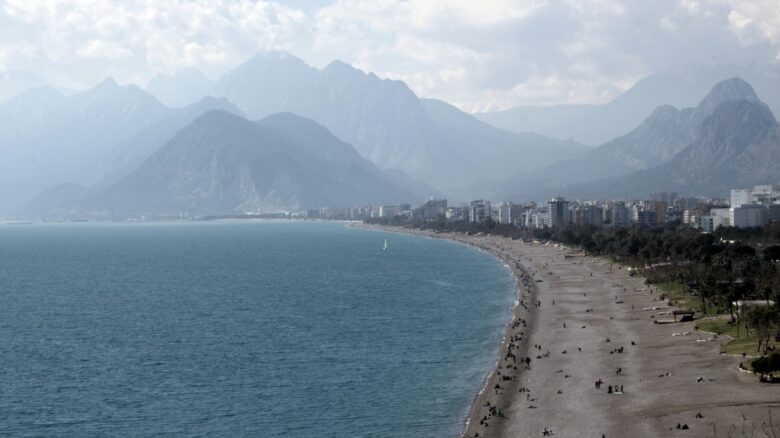
From 9 to 20 November 2026, Antalya, on Turkey’s Mediterranean coast, will host the thirty-first Conference of the Parties to the United Nations Framework Convention on Climate Change (UNFCCC). One year on from Belém, climate diplomacy approaches this gathering with new tools for cooperation and issues still unresolved: financing adaptation, supporting a just transition and following through on the commitment to transition away from fossil fuels. The Turkish presidency and Australia’s leadership of the negotiations will have to bring these priorities together, following a process that took the conference’s preparations all the way to the Pacific islands.
From the Amazon to the Mediterranean, the territories and their vulnerabilities change, but the challenge remains the same: turning commitments into concrete and timely action. COP31 will be judged above all on its ability to advance this shift. Implementing agreements, however, requires new political choices: who finances the transition, how its costs are distributed, and what support is guaranteed to the most vulnerable countries. The difficulties that have emerged over the course of this year show how unresolved these issues remain.
Belém’s legacy: new tools and unfinished compromises
Ten years after the Paris Agreement, COP30 set out to reinvigorate climate cooperation, and the Belém Political Package marked progress on adaptation and the social dimension of the transition, while leaving disagreements over fossil fuels unresolved. The failure to agree on a shared roadmap for their gradual phase-out remains one of the main issues Antalya will have to address.
The Mutirão decision introduced two tools to support the implementation of national climate plans: the Global Implementation Accelerator, a voluntary initiative for cooperation on mitigation and adaptation, and the Belém Mission to 1.5, aimed at raising ambition and promoting cooperation and investment. Reports on the work carried out under both initiatives will be presented in Antalya.
Their effectiveness will depend on countries’ ability to overcome practical obstacles: developing projects, accessing technologies and finance, and coordinating administrations. The risk is that the number of initiatives increases without improving the capacity to implement measures.
Meanwhile, the Brazilian presidency has continued working on two roadmaps: one for transitioning away from fossil fuels, and the other for halting and reversing deforestation and forest degradation by 2030. These processes seek to advance discussions on the issues left open in Belém, but they remain presidency-led initiatives: they do not constitute negotiated agreements or new obligations for all Parties.
The Preparatory Year: from Santa Marta to the stalemate in Bonn
The road to Antalya has passed through two distinct events: the Santa Marta conference on transitioning away from fossil fuels and the UNFCCC negotiations in Bonn. The former, organised by Colombia and the Netherlands from 24 to 29 April, brought together 57 countries as well as representatives of civil society and the research community. Discussions focused on the conditions needed to reduce economic dependence on fossil fuels, transform demand and supply, and strengthen international cooperation.
Santa Marta produced new strands of work, a scientific group on the energy transition, and the announcement of a second meeting, to be co-organised by Ireland and Tuvalu in 2027. The outcomes will also contribute to the Brazilian presidency’s roadmap and, although the conference did not establish a shared timetable for phasing out coal, oil and gas, it offered participating countries a forum to address the practical conditions of the transition. It remains to be seen how far this cooperation can help foster broader agreements in multilateral negotiations.
The difficulties of building this consensus emerged in Bonn, where the intersessional meetings of the UNFCCC subsidiary bodies, known as SB64, took place from 8 to 18 June. Tasked with advancing the issues left unresolved in Belém and preparing November’s decisions, the meetings produced limited results. Terms of reference were agreed for the review of the Just Transition work programme, along with steps to support the continuity of technology cooperation. On other matters, disagreements even prevented a common document from being forwarded as a basis for the next session.
Bonn thus made clear that the language of implementation has not eliminated divisions in the negotiations. Calls for faster action continue to encounter disagreements over responsibilities, available means and the practical meaning of previous agreements. Antalya inherits these difficulties, along with the need to ensure that technical work does not become a way of postponing political decisions.
A further preparatory step came on 19 October, with a joint communication from the incoming presidency and the presidency of the negotiations announcing the pairs tasked with facilitating political discussions. Germany and India will cover mitigation; France and the Philippines, finance; Sierra Leone and the United Kingdom, adaptation; Mexico and Poland, just transition; and Canada and Palau, oceans. Their mandate provides for informal consultations with Parties and negotiating groups ahead of the conference and, if necessary, further consultations during the COP after the subsidiary bodies have concluded their work.
The appointment of facilitators prepares the shift from technical discussions to the search for political compromise, without prejudging the outcome: the pairs do not make decisions on behalf of the Parties, and a country’s participation does not indicate a change in its position. Their effectiveness will also depend on coordination across interdependent issues, beginning with the relationship between mitigation ambition and financial support.
The Pacific brings the question of survival to the forefront
The Pacific pre-COP programme took place from 5 to 8 October, with a leaders’ meeting in Tuvalu on 5–6 October and the ministerial segment in Fiji on 7–8 October. The visit to Tuvalu brought participants to face directly the effects of sea-level rise, linking preparations for the negotiations to the needs of the most exposed territories. These concerns are central to the Taku Pakasoa Declaration, adopted on 6 October, which reaffirms the 1.5 °C goal and the need to limit the extent and duration of any overshoot. The text recognises the leadership of Pacific States and the contribution of young people, Indigenous Peoples and local communities to climate action. It also reiterates the need to preserve the existence of States, their sovereignty and maritime rights even in the face of sea-level rise: for these countries, the climate crisis calls into question the very future of their territories and communities.
The ability to respond to these risks also depends on access to finance, another central theme of the pre-COP. According to the final Australian communiqué published by the UNFCCC, more than USD 16 billion has been committed to climate action in Pacific countries since the Paris Agreement, but more than USD 5 billion remains undisbursed. The gap between pledged and available resources shows how far financing timelines can be from the urgency of the measures required.
Alongside their call for more accessible finance, Pacific countries reiterated the need to give oceans a greater place on the climate agenda. The final communiqué refers to work towards a possible Antalya declaration on the ocean, whose content has yet to be defined. The November conference will therefore be a test of the ability to translate the priorities raised in the Pacific into commitments to reduce emissions, protect marine ecosystems and support communities.
Mitigation: implementing plans without giving up on greater ambition
On mitigation, COP31 will have to address two closely related challenges: implementing national climate plans, the Nationally Determined Contributions (NDCs), and strengthening their targets, which are still insufficient to meet those of the Paris Agreement.
The gap is evident in UNEP’s Emissions Gap Report 2026, published on 21 October. Under current policies, the global average temperature would rise by around 2.8 °C above pre-industrial levels by the end of the century. Full implementation of NDCs, followed by similar efforts, would limit the increase to around 2.6 °C; achieving net-zero emission targets as well would bring the estimate down to around 2.1 °C. A double gap therefore remains: between policies in place and announced commitments, and between the latter and what is needed to limit warming.
Above all, the report raises a crucial question about the future of the 1.5 °C goal. According to UNEP, the possibility of staying within this threshold without exceeding it, or with only a limited overshoot, is now out of reach. The priority becomes limiting the magnitude and duration of the overshoot and creating the conditions to return below the threshold by the end of the century. The minimum-overshoot pathway examined in the report would require global emission cuts of 45% by 2035 compared with 2025, against the 11–15% projected under full NDC implementation. Even this scenario would depend on substantial CO₂ removals, whose feasibility remains uncertain. Moreover, a subsequent decline in temperatures would not necessarily undo the damage caused in the meantime.
These findings make discussions on the transformation of energy systems even more urgent, against a backdrop of more fragile cooperation. The withdrawal of the United States from the Paris Agreement, which took effect on 27 January 2026, has taken one of the world’s largest emitters out of the diplomatic and decision-making arena for climate action. UNEP cites this, together with revisions to estimates of historical emissions, among the factors behind the worsening projections compared with the previous edition. The choices made by other major emitters, and their ability to support collective action, therefore carry greater weight.
In this context, the COP31 presidency has proposed several sectoral targets under the Action Agenda: increasing electricity’s share of global final energy consumption to 35% by 2035, reducing the energy intensity of buildings by at least 25%, and halving the growth of global waste by the same year. Announced in Bonn, these initiatives aim to mobilise governments, cities, businesses and investors. As clarified by the presidency, they are voluntary cooperation targets and do not introduce new national obligations.
Climate Finance: the gap between targets and accessible resources
Finance continues to determine whether progress can be made on the other issues. The framework inherited from Baku and taken up again in Belém includes two figures that must be kept distinct: the goal of mobilising at least USD 300 billion a year by 2035 for emerging countries, with advanced economies taking the lead, and the broader mobilisation of at least USD 1.3 trillion annually from public and private sources.
In Antalya, the credibility of this framework will depend on the ability to make the path from aggregate targets to usable finance clearer. Higher volumes must be assessed alongside access conditions, the cost of capital, the predictability of support and recipients’ capacity to prepare and implement measures.
The quality of funding is particularly relevant for adaptation: finance that entails additional repayment obligations has different implications from a grant. The Belém decision recognises the urgency of public resources, grants and highly concessional finance, especially for the most vulnerable countries.
From this perspective, the Pacific experience offers a concrete benchmark for COP31: the question is not only how much money is mobilised, but also who is able to obtain it, through which procedures and within what timeframe. A greater ability to disburse funding can make the difference between a commitment that builds trust and a promise that undermines it.
Adaptation: measuring progress, financing protection
Adaptation is one of the areas in which Belém left a more clearly defined foundation. The Parties adopted 59 indicators to measure progress towards the Global Goal on Adaptation (GGA) and launched the Belém–Addis Vision on Adaptation: a two-year process of policy alignment, accompanied by further technical work on methods and metadata. Discussions continued throughout the year in Bonn and Baku.
The challenge now is to make this framework useful for decision-making: assessing adaptation means verifying, for example, whether people are less exposed to a risk, whether essential services withstand extreme events more effectively, or whether access to water becomes safer. This requires comparable information, but also attention to territorial differences and countries’ statistical capacities. The negotiated outcome must therefore be accompanied by technical support and resources to implement measures. Indicators can make gaps visible; they cannot close them on their own.
COP30’s call to triple adaptation finance by 2035 is a significant political signal, but it does not amount to resources already secured. UNEP’s Adaptation Gap Report 2025 estimated annual adaptation costs and needs in developing countries in 2035 at around USD 310–365 billion, at constant 2023 prices, which is why adaptation finance cannot be postponed until the end of the decade. Measures require preparation, expertise and continuity, while risks continue to accumulate. COP31 will need to help make the path towards 2035 more efficient without losing sight of immediate needs.
Loss and Damage and Just Transition: two tests of equity
Support for adaptation is accompanied by a separate question: how to respond to losses and damage that prevention cannot avert. The Fund for responding to Loss and Damage opened its first window for funding requests under the Barbados Implementation Modalities between 15 December 2025 and 15 June 2026. A total of 176 funding requests were received from 119 developing countries, amounting to approximately USD 2.8 billion, while funding pledges to the Fund currently exceed USD 820 million. In addition, the Fund has provisionally allocated USD 21.6 million in response to flash floods in Nepal. The launch of the funding cycle marks a concrete step in establishing the Fund, but it must be distinguished from the approval of individual proposals and the disbursement of resources. Assessing its progress will require looking at the entire process: from requests submitted to projects approved, through to transfers and benefits delivered.
The just transition raises a complementary question: how to prevent the economic transformation needed to reduce emissions from exacerbating inequalities and vulnerabilities. In Belém, the Parties decided to develop a dedicated mechanism aimed at strengthening international cooperation, technical assistance, capacity-building and knowledge-sharing. The process of making it operational is part of the work scheduled for the Antalya session. Following Bonn, discussions continued at an informal workshop in Sydney, from 30 September to 2 October, devoted to the just transition work programme and the new mechanism. The scope of this issue goes beyond the restructuring of individual industrial sectors: it concerns employment, access to energy, social protection and communities’ participation in decisions that transform their living conditions.
What would constitute a credible outcome in Antalya
The events of 2026 reveal a multilateral climate system capable of producing new initiatives, but still struggling when it comes to agreeing on responsibilities and the conditions for their implementation. Santa Marta opened a space for cooperation on fossil fuels; Bonn revealed the persistence of negotiating deadlocks; and the Pacific brought discussions back to the concrete consequences of delays.
COP31 can be assessed on its ability to advance several identifiable steps: the process of operationalising the just transition mechanism, work on adaptation tools, a more credible and accessible financing pathway, stronger implementation of national plans, and enhanced cooperation on the energy transition. It will be equally important to ensure that voluntary initiatives contribute to shared goals without weakening calls for greater ambition.
The new scientific evidence makes it clearer how much remains to be done. For COP31, acknowledging the risk of exceeding 1.5 °C will have to go hand in hand with greater ambition and implementation capacity, while keeping the protection of exposed communities at the centre.
From Belém to Antalya, the challenge remains the ability to connect the global scale of agreements with the concrete scale of their consequences. It is on this ground that COP31 will have to demonstrate the value of the commitments it has inherited.